
All year long, fiber laser cutting machines are used in a variety of applications, and to maintain them operating at their best, routine maintenance is necessary. This is especially apparent during the winter or in regions with extreme cold. Make sure to use the proper anti-freezing methods to prevent downtime and unnecessary costs. Here are some maintenance guidelines for fiber laser cutting machines in colder areas.
Operating the fiber laser cutting machine at a temperature much below 0°C is certain to cause issues because the temperature drops fast in cold conditions. The internal pipes of the laser or water cooling system can rupture or deform as a result of the cooling water’s volume expanding when it freezes. This will ultimately result in serious losses and further damage to other essential components.
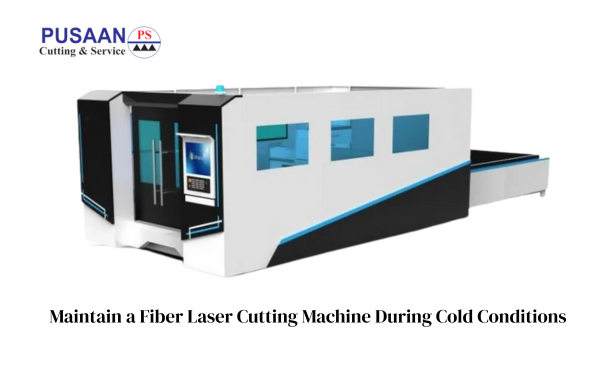
How to Maintain a Fiber Laser Cutting Machine During Cold Conditions?
Please follow the following guidelines to properly keep the fiber laser cutting machine in a cold environment:
1. Keep the working temperature above 0℃
It is best to improve the workshop’s heating facilities and make sure that the ambient temperature is kept above 0°C so that the fiber laser cutting machine can operate normally in the winter.
The ambient temperature in the workshop could be below 5°C if there is no heating equipment. For a full day, keep the cooler running.
To guarantee that the cooling water circulates and the temperature is not below the freezing point, the temperature of both normal-temperature and low-temperature water should be changed to 5–10°C in order to save energy.
Please remember to clean the screw if you add grease to it. Make sure the workshop temperature reaches the minimum lubrication temperature before adding grease to avoid freezing motion.
2. Empty the cooling water after use
Empty the cooling water from the pipeline after each usage. To efficiently release water, use a compressor or air pump. To keep the circulation equipment from freezing, remove the water pump or chiller if needed and put it somewhere hot.
3. Drainage method
The water tank, pipes, pump head, filter, deionized water tank (an optional attachment), and disconnecting the drainage device’s power supply are the primary drainage components of the laser water cooler and water tank.
Water tank drain: To empty the water from the water tank, open the drain valve (or drain plug) at the bottom of the tank. To clear the drain, you can tilt the water cooler to a specific angle if needed.
Pipe and laser drainage: disconnect the four-way water pipe first, then blow compressed air from the pipe’s outlet and drain for a minute to push the water held in the pipe to return to the drain and water tank. water draining from the water tank.
Drain the water from the filter element by unscrewing it from the chiller.
You can use compressed air to connect the water supply port and blow it back again, then press the remaining water into the pipe, laser (pipe), and pump (return to the water tank, and then discharge from the water tank drain water). To check if there is water in the water tank, open its cover. If a cooler is available, tilt it gently to let the water flow out or use a dry towel to dry it.
Drain the pump head: By unscrewing the screw beneath the pump to remove the water. Tightening the drain screw after using compressed air to remove any remaining water from the pump head is the best course of action
Drainage of the filter and deionized water tank: To remove any remaining water, open the drain valve located at the bottom of the filter and deionized water tank or the Plexiglas shell.
4. Add antifreeze to the cooling water
Antifreeze must be used if power outages occur frequently or if daily draining of the cold water is not possible. Typically, antifreeze is made of alcohol and water. Strong boiling and flash points, strong electrical and specific heat conductivity, low temperature viscosity, low foam, and corrosion to rubber hoses and metal components are all necessary. Antifreeze should have a freezing point that is 5°C below the lowest temperature in the work environment when selecting or preparing it.
5. Use ethanol for short-term freeze protection
Temporary antifreeze is required if there is a power outage and the cooling water cannot be discharged. Ethanol, or alcohol, can be added to purified or deionized water. No more than 40% of the water tank’s volume may be added. Paint and rubber parts cannot be used for a long period of time since they are corrosive to metals. Within a week, you have to empty and clean the cooling pipe using deionized or filtered water. You must select a particular antifreeze if you still require antifreeze.
If you want to know more about the fiber laser cutting machine, you can contact us; Pusaan Automation will update relevant information about the sheet metal laser cutting machine from time to time.